Skydiving vs Paragliding in Interlaken: Which Should You Choose?
Interlaken sits on a narrow strip of land between Lake Thun and Lake Brienz, with the Eiger, Mönch and Jungfrau filling the southern skyline. Two of its most iconic experiences both happen in the air — and choosing between them comes down to what kind of memory you want to make.
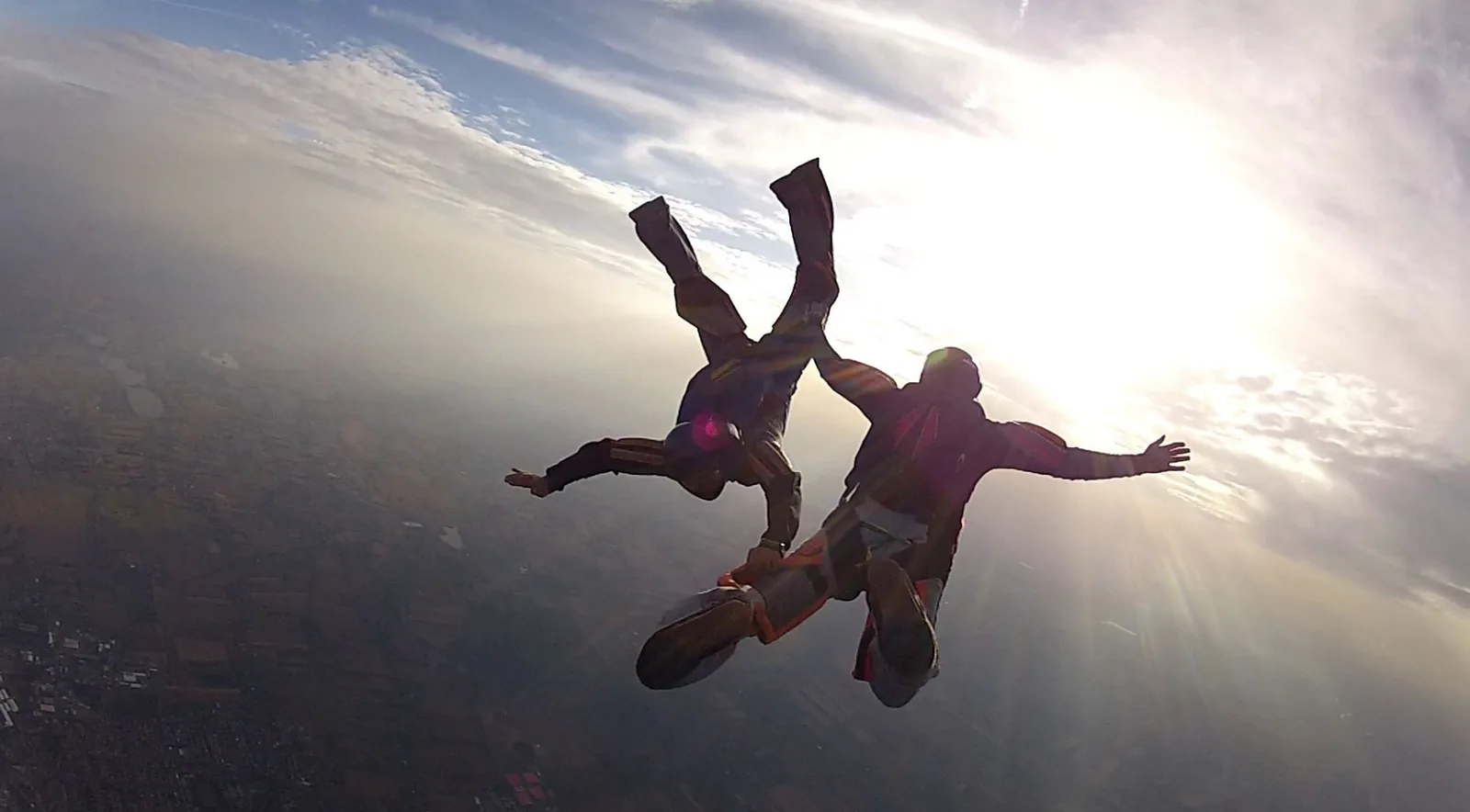
Both tandem skydiving and tandem paragliding pair you with a certified professional and need zero prior experience — but the two experiences could not feel more different. If you're trying to decide between an airplane skydive and a serene paragliding flight, this guide breaks down exactly what each involves and how they compare on cost, thrill, safety and requirements, so you can book the one that's right for you.
What tandem skydiving actually involves
Tandem skydiving is the classic bucket-list leap: you're harnessed to the front of a certified instructor who controls the entire jump. Here's how it unfolds, from booking to landing:
- Check-in and briefing. You arrive at the dropzone, sign a waiver, watch a short safety video and meet your instructor. Near Interlaken, the airplane dropzone is at the Reichenbach airfield in the Kandertal valley, roughly a 20-minute transfer from town.
- The ascent. A scenic 15–20 minute flight climbs to jump altitude — typically 4,000 m (13,000 ft) over the Swiss Alps, with views of the two lakes and the Eiger, Mönch and Jungfrau.
- The freefall. You exit the aircraft and freefall for roughly 45–60 seconds at about 200 km/h (120 mph). There's no roller-coaster stomach drop — because the plane is already moving forward, you transition smoothly into freefall and it feels more like floating on a cushion of rushing air.
- The canopy ride. At around 1,500 m the instructor deploys the parachute and you glide gently for 4–7 minutes, taking in the panorama.
- Landing. You touch down at the dropzone, usually lifting your legs for a smooth landing. The whole experience takes about 3–3.5 hours including transfers.
Interlaken also offers a signature helicopter skydive variant, jumping from over 4,000 m after a helicopter ride that brings you closer to the peaks, glaciers and waterfalls of the Lauterbrunnen and Grindelwald valleys.
Other experiences you might enjoy
Interlaken and the wider Jungfrau region are packed with things to do once you've had your flight. Alongside a tandem paragliding flight in Interlaken and the exhilarating airplane skydiving over the Swiss Alps from Reichenbach, consider the scenic Mürren paragliding panorama tandem flight high above the Lauterbrunnen valley, a trip up to Jungfraujoch – Top of Europe, a cruise on Lake Thun or Lake Brienz, or a day exploring Grindelwald and the Harder Kulm viewpoint above town.
What tandem paragliding actually involves
Tandem paragliding is a fundamentally different kind of flight. Instead of falling, you fly — launching on foot from a mountainside and gliding under a large, wing-shaped canopy with your pilot seated behind you.
- Meeting and transfer. You meet at a shop or meeting point in central Interlaken, then take a short bus ride (about 20 minutes) up to the launch. The most common site is Beatenberg / Amisbühl, at roughly 1,350 m — about 800 m above Interlaken.
- The briefing and launch. After a safety briefing (often given on the drive up), you walk a few steps down a gently sloping grassy hillside with your pilot. There's no jump and no stomach drop — the wing simply lifts you off the ground.
- The flight. You soar for roughly 10–20 minutes over Lake Thun, Lake Brienz and the town, with the Jungfrau massif as a backdrop. Your pilot handles all navigation and can tailor the flight — a calm, scenic glide, or, if you want a thrill, steep spirals and wingovers. Longer "double airtime" thermal flights of 30–40 minutes are available in season (roughly April to October).
- Landing. You land softly on grass near the Höhematte park in the centre of Interlaken, within walking distance of hotels and train stations. Plan on about 1.5 hours total for the standard flight.
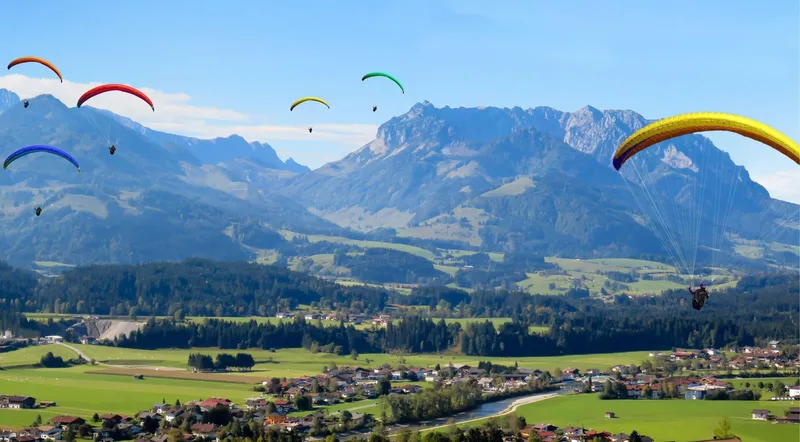
Side-by-side comparison
| Feature | Tandem Skydiving | Tandem Paragliding |
|---|---|---|
| Typical cost (Interlaken) | CHF 420–475 (airplane); CHF 450–690 (helicopter) | CHF 180–199 (standard); ~CHF 299 (double airtime) |
| Total time commitment | ~3–3.5 hours | ~1.5 hours |
| Time actually in the air | ~45–60 sec freefall + 4–7 min canopy | ~10–20 min (30–40 min for thermal flights) |
| Altitude | Jump from ~4,000 m (13,000 ft) | Launch ~1,350 m (~800 m above town) |
| Launch method | Jump from a plane or helicopter | Run off a gentle mountainside slope |
| Adrenaline level | Very high — intense, fast freefall rush | Moderate — calm by default, thrill on request |
| Minimum age | 12 (with parental consent) at the airplane dropzone | From ~6 years (with consent) at some operators |
| Weight limits | Up to ~105 kg; some add BMI limits | Roughly 25–100 kg depending on operator/launch |
| Weather dependency | High — no jumps in clouds, rain, or high winds | High — very sensitive to wind and thermals |
| Best for | Adrenaline seekers wanting a once-in-a-lifetime rush | Travellers wanting scenery, serenity and longer airtime |
The sensation: adrenaline rush vs serene flight
This is the heart of the decision. Skydiving is intense from the moment the door opens: the wind roars, you leap, and you plummet through the sky at highway speeds before the canopy brings sudden calm. It delivers one of the most concentrated adrenaline rushes available to a first-timer — and most jumpers agree the scariest part is the anticipation in the plane, not the fall. Once you're out the door, fear tends to flip into pure exhilaration.
Paragliding is the opposite in tempo. There's no leap and no freefall — you're gently lifted off a hillside and then glide, quiet and smooth, like a bird. Many first-timers are surprised at how peaceful it is, and because you launch from the ground and rise gradually rather than jumping from height, paragliding tends to trigger far less fear in people nervous about heights. If you want, your pilot can add spirals and dynamic turns for a genuine kick — a range that skydiving's single, all-out format doesn't have.
A useful way to think about it: skydiving is a short, explosive moment of pure thrill; paragliding is a longer, immersive experience of flight and scenery.
Safety: what the statistics say
Both activities have strong safety records when flown tandem with certified professionals — but it's worth being honest about the data and its limits. Directly comparable, apples-to-apples statistics for tandem skydiving versus tandem paragliding aren't published by any single authority, so the figures below come from different sources and populations.
Skydiving. The United States Parachute Association's 2024 survey recorded a fatality rate of about 1 per 431,111 jumps — the lowest on record — and the vast majority of fatalities involve experienced solo jumpers, not tandem students. USPA data shows a 10-year average of roughly one fatality per 500,000 tandem jumps, the safest category of the sport. Every tandem rig carries a main and reserve parachute plus an Automatic Activation Device (AAD) that deploys the reserve automatically if needed.
Paragliding. A 2022 peer-reviewed study estimated roughly 1.4 deaths and 20 serious injuries per 100,000 flights, and found only a small fraction of incidents involved equipment failure — the rest came down to pilot control or decision errors. That's precisely why flying tandem with a seasoned professional matters: research suggests tandem flights carry a significantly lower accident rate than solo flights, since a career pilot manages the wing and avoids the marginal conditions that cause most solo accidents. Our full guide to paragliding safety, pilot certification and reserve parachutes breaks down exactly what that redundancy looks like.
The bottom line on safety: these numbers can't be stacked directly against each other — the paragliding figures largely reflect solo recreational pilots, a much higher-risk group than a passenger flying tandem with a career pilot. The single biggest safety factor in either sport is the experience and judgment of the professional you fly with, so choose a long-established operator with a strong track record.
Which activity suits which traveller?
Choose tandem skydiving if you:
- Are chasing the most intense adrenaline rush possible
- Want to check freefall off your bucket list
- Don't mind a bigger budget and a half-day time commitment
- Are comfortable with a fast, high-altitude, high-speed experience
Choose tandem paragliding if you:
- Want to savour the scenery and actually fly, not just fall
- Prefer a calmer, more serene experience (with the option to add thrills)
- Are nervous about heights or a stomach-dropping jump
- Want a more affordable, shorter, family-friendly adventure (children can often join from age 6)
- Are travelling with a mixed group of ages and comfort levels
Many visitors do both — but if you have to pick one, and you want breathtaking Alpine views, a gentle launch and time in the air to truly take it all in, paragliding is the more accessible, more scenic and better-value choice for the majority of travellers.
Practical tips for booking in Interlaken
- Book early in your stay. If weather grounds you one day, you'll have days left to reschedule — don't save the flight for your last morning.
- Fly in the morning. Thermals are calmer before midday and the mountain views are often clearer before afternoon haze builds up.
- Dress right. Wear closed, lace-up sneakers (flip-flops won't do) and bring a layer — it's colder at altitude even in summer. Most operators can lend you a warm flight suit.
- Add the photos. Operators sell a photo/video package for around CHF 40. You won't be able to hold your own GoPro during either activity, so if you want footage, book it at the same time.
- Book ahead in peak season. Interlaken's air sports sell out fast in July and August — reserving 5–10 days ahead is wise, especially for morning slots.
Ready to fly? Take the serene route above the Alps
If it's raw, heart-pounding freefall you're after, skydiving delivers. But if you want to glide peacefully above the turquoise lakes and snow-dusted peaks of the Jungfrau region — with time to actually enjoy it — tandem paragliding is the experience that will stay with you. Our top pick launches from Amisbühl above Beatenberg, is flown by qualified Skywings pilots and lands right in the centre of town.